
CULTURE
Norwegian researcher: The years I have spent in Azerbaijan over past three decades were a wonderful journey to the Wonderland INTERVIEW
The history of Caucasian Albania continues to be one of the most fascinating and least-examined chapters of the South Caucasus’ ancient past. Although this ancient state vanished many centuries ago, numerous monuments reflecting its rich historical heritage have been preserved on the territory of modern Azerbaijan.
One of them is a church in the village of Kish, located not far from Sheki. Throughout its long history, the temple witnessed periods of prosperity and decline, until the beginning of the 21st century, when it was investigated and restored as part of an international project with the active involvement of Norwegian specialists.
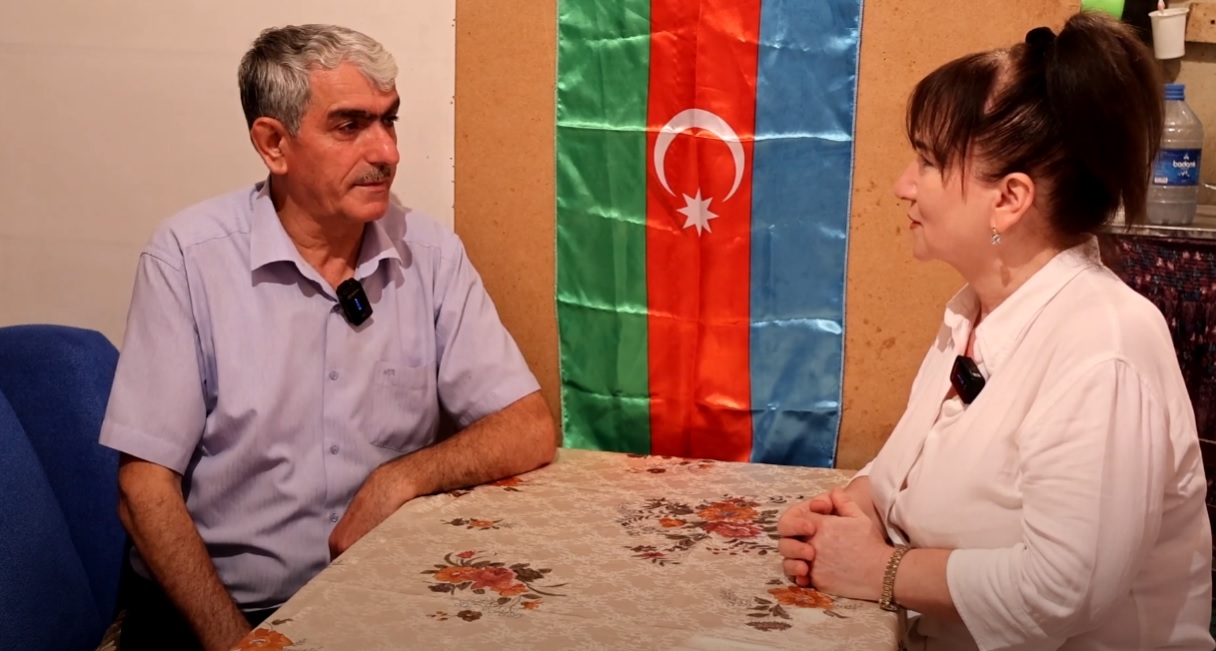
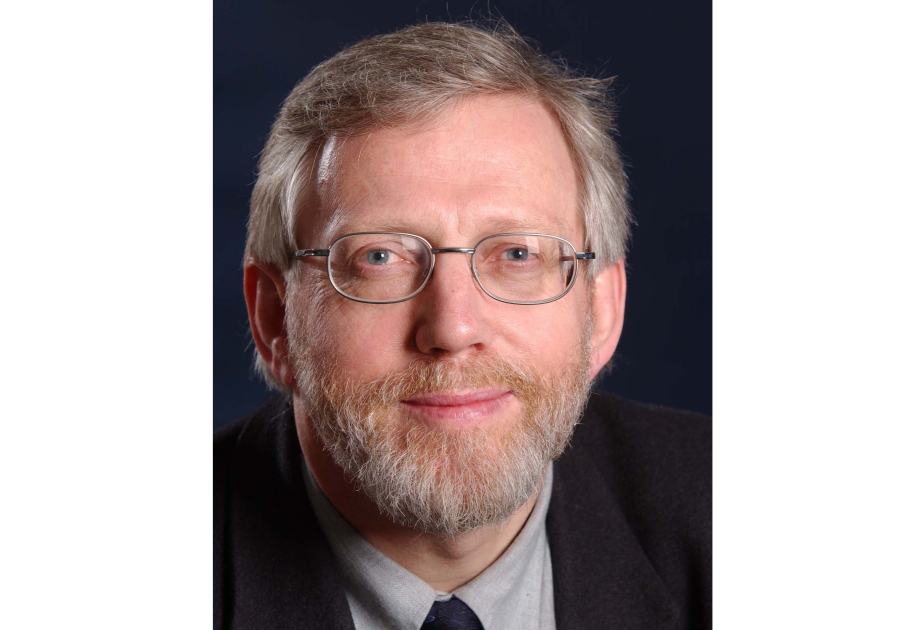
We sat down for an interview with Bjørn Wegge, a research scholar at the University of Oslo, an expert in ancient church history, who served as a mastermind behind the Kish Church restoration project. Our conversation focused on the significance of this historic monument, the overall progress of the restoration efforts, and the heritage of Caucasian Albania.
During the conversation, the Norwegian researcher highlighted the large-scale efforts on studying and restoring the ancient temple, as well as an extraordinary cultural initiative that emerged from this partnership, the musical album “Landet vi kommer fra ("The Land We Came From"), which was recorded together with Azerbaijani musicians.
- Mr. Wegge, you have travelled to Azerbaijan several times. Could you please share your experience and tell us about your very first journey to the country?
- My first journey to Azerbaijan took place during the winter of 1994. During my trip to Iran, I received an invitation from "Red Crescent" humanitarian organization to visit the war-affected border regions of neighboring Azerbaijan. At that time, the country was experiencing a serious humanitarian crisis driven by a huge influx of displaced people who were forced to flee their native homes and were accommodated in temporary tent camps situated north of the Araz River, mainly in the Imishli and Saatli districts.
During that trip, I received appeals from the local authorities with a request to provide assistance to Azerbaijan by Norwegian humanitarian organizations to help navigate the ongoing crisis situation.
The Norwegian Humanitarian Enterprise (NHE) organization, which I represented back in Norway, accepted this invitation and initiated its operations in Ganja during the summer of 1994. A professional emergency medical group was established there and it was engaged in conducting humanitarian activities among internally displaced persons across several districts around the city. This cooperation continued until 2010. Since then, I have visited Azerbaijan several times.
- Your personal contribution to the restoration of the ancient Albanian church in Kish is truly invaluable. Could you share with us how the history of this project first began?
- During my visit to Azerbaijan in March 1995, I had my first opportunity to visit the ancient and breathtakingly beautiful city of Sheki. While making a spontaneous visit to the Sheki Historical Museum, archaeologist and Director of the Museum Nasib Mukhtarov invited me to the village of Kish, which lies north of the city.
The goal of the trip was to get acquainted with the oldest temple in Azerbaijan. A small stone church in Kish had somehow managed to escape total destruction. Since it had been abandoned for over a century, it was completely neglected and, actually, on the verge of collapsing into pile of ruins.
As a researcher specializing in church history and early Christianity, I recognized immediately that I was standing in front of a unique monument, the roots of which trace back to the depths of the ancient history of Azerbaijan.
Following that trip, I met Professor Farida Mammadova, the country's leading specialist on the history of Caucasian Albania. Getting to know her academic research played a decisive role in shaping my understanding of Azerbaijan’s rich and multifaceted history - both ancient and modern.
One of the most important chapters was connecting with Davud Akhundov, the architect and historian, as well as with Gulchohra Mammadova, the professor and Rector of the Azerbaijan University of Architecture and Construction, who later led the restoration project in Kish.
Sabina Hajiyeva, an honored architect, later involved in the project, and it was this close collaboration with such dedicated specialists that laid the groundwork for the future archaeological and restoration project at the Kish church.
The restoration work was completed in 2003, and in September of that year, a solemn opening ceremony of the church was held. My wife and I were also invited to attend this significant historical and cultural event.
In the photo: Eli Wegge, Bjørn A. Wegge, Professor Gulchohra Mammadova, Eyvind Skeie (Norwegian poet and writer), composer Galib Mammadov, Sevda Mammadova.
- Ultimately, the Kish church project caught the attention of the world-renowned Norwegian explorer and researcher Thor Heyerdahl. Could you tell us how he became connected with this project?
- My long-term relationship with the Norwegian explorer and researcher Dr. Thor Heyerdahl became an important part of my activities involving Azerbaijan. Our acquaintance with Dr. Heyerdahl dates back to the 1980s. By the late 1990s, our communication intensified, and his curiosity about Azerbaijan and the wider Caucasus grew noticeably stronger.
Meanwhile, Thor Heyerdahl began closely following my work in Azerbaijan and shared my deep interest in the history of the Caucasus. I sent him a copy of my book, "Azerbaijan: Where East Meets West," which was published in Norwegian and English. He was particularly captivated by the chapter dedicated to the Udi people, whom I had first met in the fall of 1994 in the village of Nij, Azerbaijan’s Gabala district. Years later, this topic took a central place in my activities.
Thor Heyerdahl expressed his strong desire to visit Azerbaijan again and asked for my help in organizing the trip and establish connections with the country's scientific community. At the time, Thor Heyerdahl was already 86 years old, and given his age and health, he wanted to make this journey as soon as possible. We agreed on a joint trip to Azerbaijan in the fall of 2000. However, shortly before the trip, my wife fell ill, making it impossible for me to accompany him. Nevertheless, I organized that visit and meetings with scientists and specialists who could best support his research.
Earlier that summer, in 2000, Thor Heyerdahl and I co-delivered a series of lectures to Norwegian audience, talking about the upcoming trip and shared our fascination with the ancient history of Azerbaijan.
2000. Historical festival in Norway dedicated to Azerbaijan and its ancient history in the Caucasus.
Later that same year, during a joint trip to Azerbaijan and Georgia, Dr. Heyerdahl also visited the church in Kish, where by that time archeological research and preparations for restoration were already well underway with the support of Norway.
Thor Heyerdahl's visit to Azerbaijan was very successful. His observations and reflections were later published in his book “In Search of Odin. In the Footsteps of Our Past” ("Jakten på Odin – På sporet av vår fortid") published in 2001. In this work, he explores the potential connections linking the Norwegian Vikings, the Caucasus and the Udi people during the Early Middle Ages.
Dr. Thor Heyerdahl passed away in October 2002 at the age of 87. The book “In Search of Odin. In the Footsteps of Our Past” became the last work in his lifelong career as an author, explorer, and researcher.
- One of the most unique and unexpected outcomes of your relationship with Azerbaijan was the musical album " The Land We Came From.” How did the idea of this project originally come about?
- During my second visit to Azerbaijan in 1994, I met with a diverse array of professionals from the country’s cultural and academic circles. Among them were the composer and musician Galib Mammadov, as well as his wife, Sevda. Galib Mammadov had an incredibly deep knowledge of Azerbaijan’s musical, artistic and academic landscape. Thanks to him, I was able to build relationships with a group of scholars from the universities in Ganja and Baku, as well as representatives from the Baku Music Academy, the Azerbaijan State Symphony Orchestra, theatre figures and fine arts community.
During my conversations with Galib, we discussed the possibility of launching a joint musical project featuring both Azerbaijani and Norwegian musicians and cultural figures, as a meaningful platform for cultural exchange and creative cooperation between the two countries.
During another trip to Azerbaijan, I invited my friend and professional musician Per Oddvar Hildre to join me. Per Oddvar Hildre was recognized as one of the leading choral conductors and prominent musicians not only in Norway, but across all of Scandinavia.
Work soon began on a unique project, bringing together with Norwegian choir SKRUK and performers and musicians from Azerbaijan. The collaboration progressed very successfully, and by the fall of 1997, the album “Landet vi kommer fra” ("The Land We Came From") was released.
Well-known Azerbaijani musicians and performers such as Siyavush Karimi, Hasanagha Sadigov, Elshan Sadigov, Shafiga Eyvazova, Ilgar Muradov, Rashad Hashimov and Brilliant Dadashova took part in the recording of the album.
The project was led by composer Galib Mammadov, who also arranged the music for the album and composed the featured track “La den brenne.”
Every melody featured in the project was Azerbaijani, with lyrics deeply rooted in the country’s folklore, local storytelling traditions and rich historical heritage.
The album was recorded at the studio of Rafig Babayev in Baku in February 1997. Following its release, the album became a resounding success both in Azerbaijan and Norway.
— Thank you for such a fascinating conversation, Mr. Wegge.
— Thank you so much for the interview. I would also like to express my deepest gratitude to my friends in Azerbaijan over the past 32 years. I want to express my special gratitude to the composer Galib Mammadov, his wife Sevda and their countless friends and colleagues for all the invaluable help, support and inspiration they gave me in the process of getting to know the country, its people and culture, as well as the unique geopolitical landscape of the Caucasus, located at the crossroads of East and West, Europe and Asia.
In 1903, the Nobel Prize-winning Norwegian author Knut Hamsun published a travelogue "In Wonderland" chronicling his 1899 journey from St. Petersburg to Baku through Russia and the Caucasus. Echoing the title of this book, I can truly call my own travels and the years spent in Azerbaijan and the Caucasus my great life journey to the Wonderland.
Nargiz Jafarli
Special correspondent