
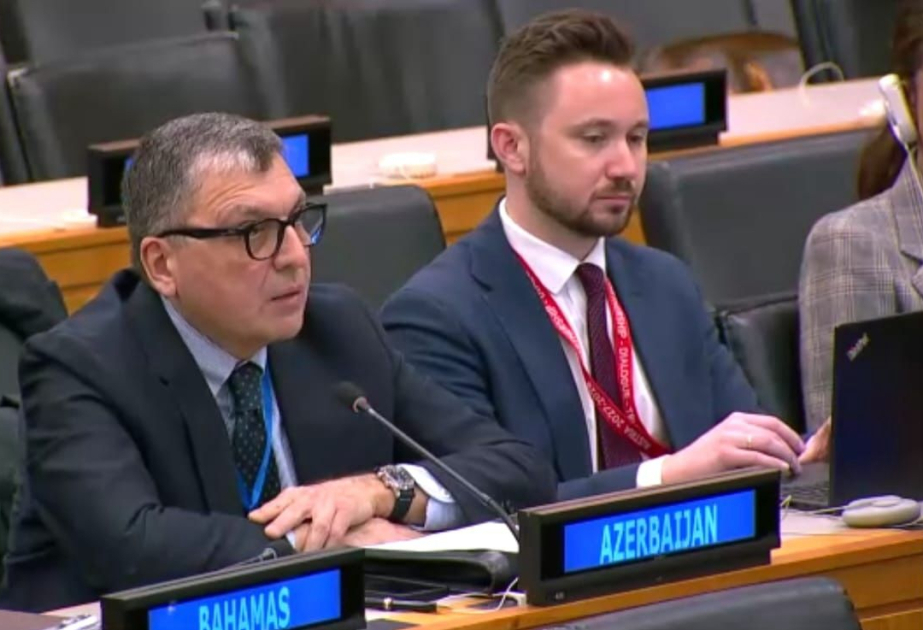
“As noted in the revised Co-Chairs' Elements Paper, there is broad support among Member States for increased representation of African countries in the Security Council. Azerbaijan has consistently upheld this position and has further strengthened and deepened its dialogue and partnership with African countries across a wide range of areas, including peace and security, sustainable development, and humanitarian cooperation,” Tofig Musayev, Azerbaijan’s Permanent Representative to the United Nations (UN), said during the discussions on the African Model of UN Security Council reform held as part of the Intergovernmental Negotiations on the question of equitable representation on and increase in the membership of the Security Council and other related matters to the Security Council (IGN).
“Azerbaijan believes that, despite existing differences, further progress in the negotiations is achievable by building on areas of convergence. These include, in particular, the legitimate aspirations of African countries to play their rightful role on the global stage; the need to rectify the historical imbalance in composition from the Global South and to enhance the representation of developing countries, small States, cross-regional groups, and other underrepresented groups; strengthening the relationship between the Security Council and the General Assembly; and improving the working methods of the Council,” Musayev noted.
“We share the position reflected in the African Model that the Security Council should not be used to advance national political agendas, nor should it engage in matters that do not constitute a threat to international peace and security.
Furthermore, it is essential to emphasize that hand-in-hand with increased representation, the primary objective of any reform should be to enhance the overall effectiveness, accountability, and transparency of the Security Council, ensuring it responds decisively and legitimately to contemporary challenges while upholding its central role in the international security architecture through the full and consistent Implementation of its decisions,” he emphasized.
“The issue of veto remains one of the central elements of Security Council reform. We take note of the various options put forward and discussed by Member States, including those reflected in the African Model. In this regard, we reiterate the need for a careful, in-depth, and comparative analysis, both to assess the impact of the veto on the effectiveness of the Council in discharging its mandate in accordance with the UN Charter and to evaluate the potential risks, imbalances, and implications for equality that any modification might entail.
We also welcome the practical proposals contained in the African Model to improve the working methods of the Security Council and its relationship with the General Assembly. We share Africa's view that the Security Council and the General Assembly should work closely together within their respective mandates, fostering a cooperative and harmonious relationship while avoiding any encroachment on each other's responsibilities,” the representative added.
Malahat Najafova
Special correspondent