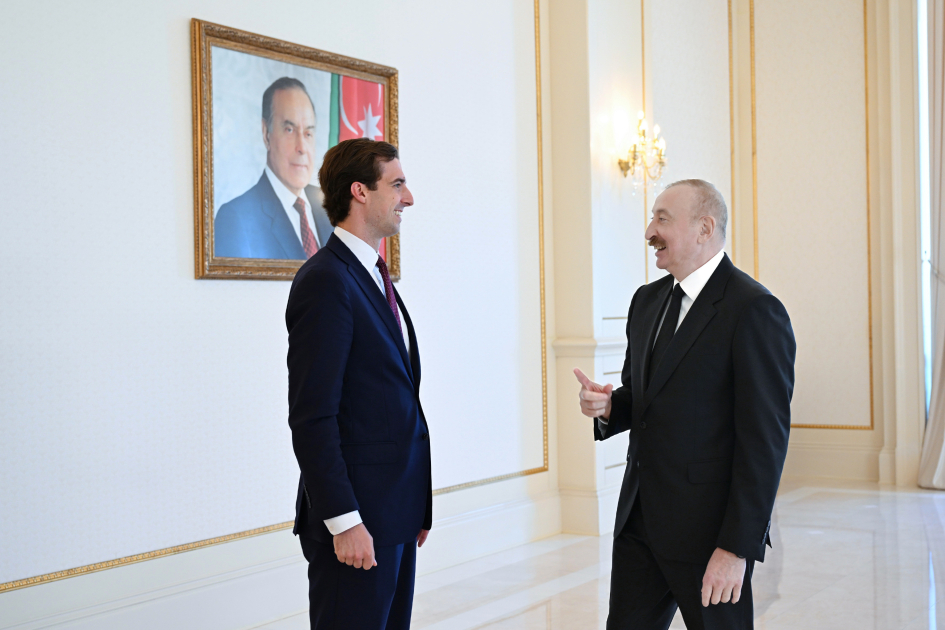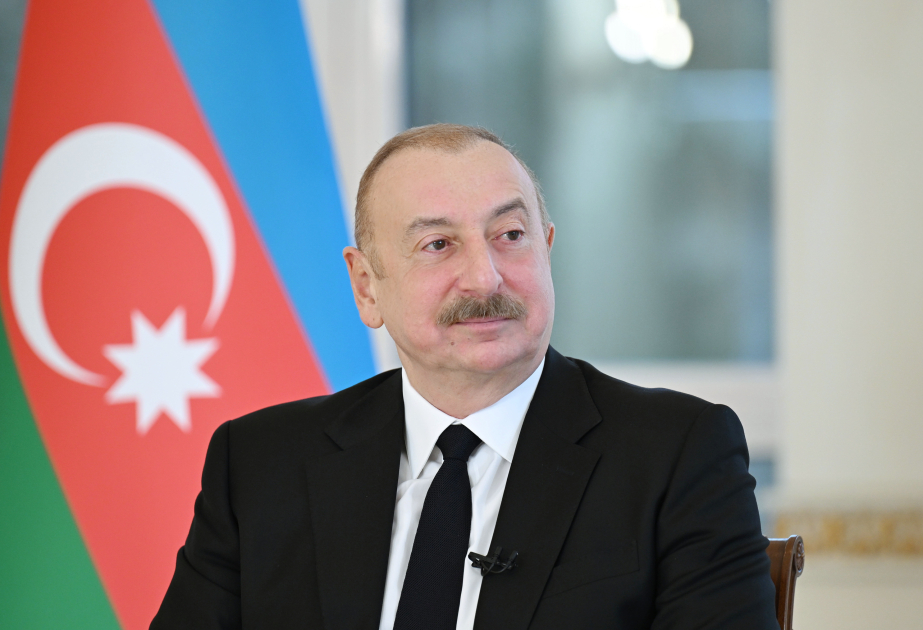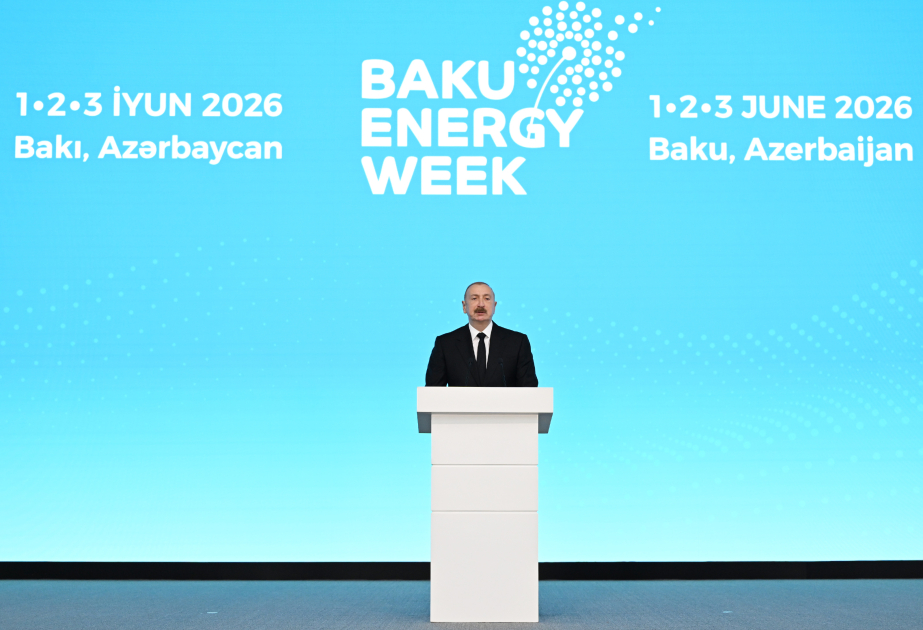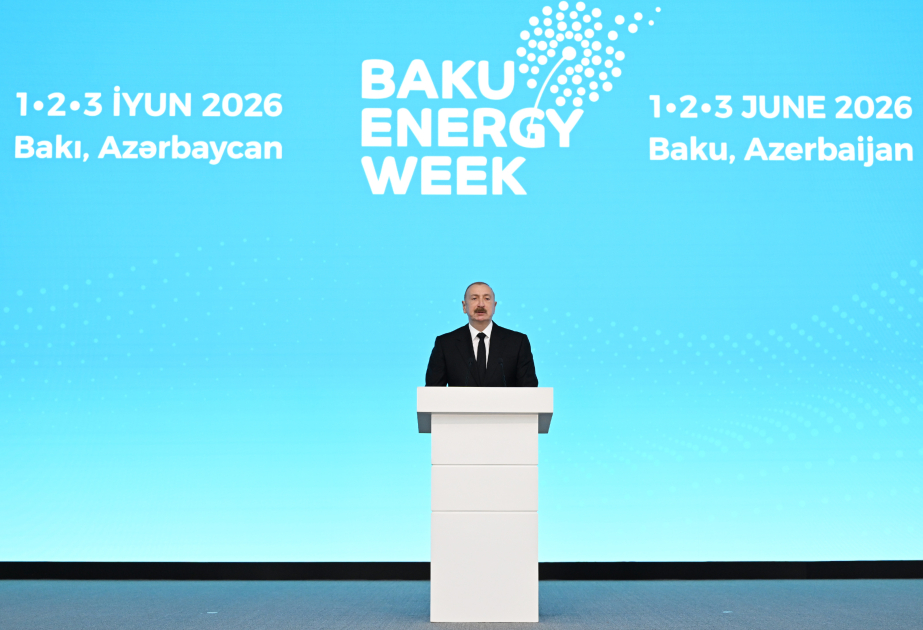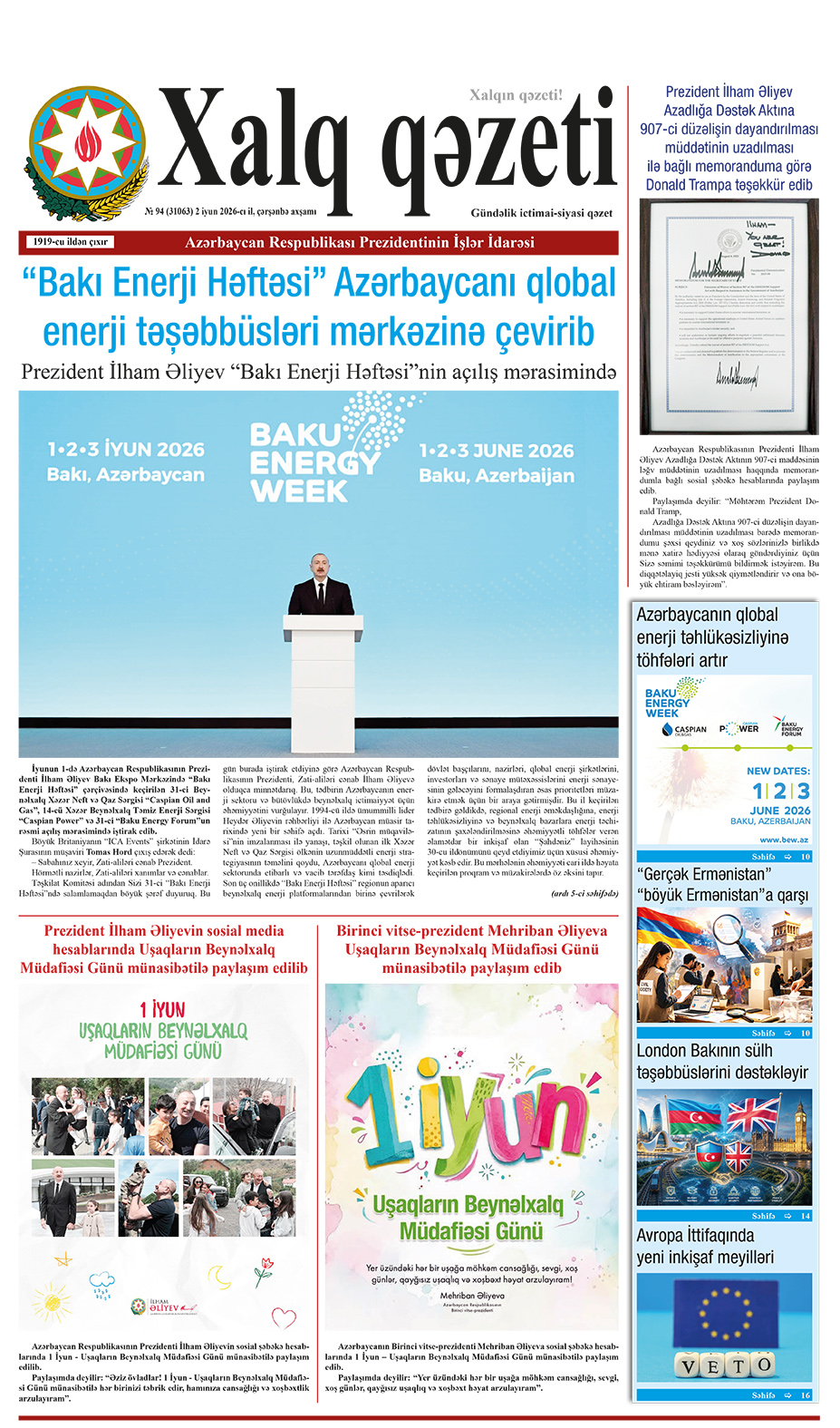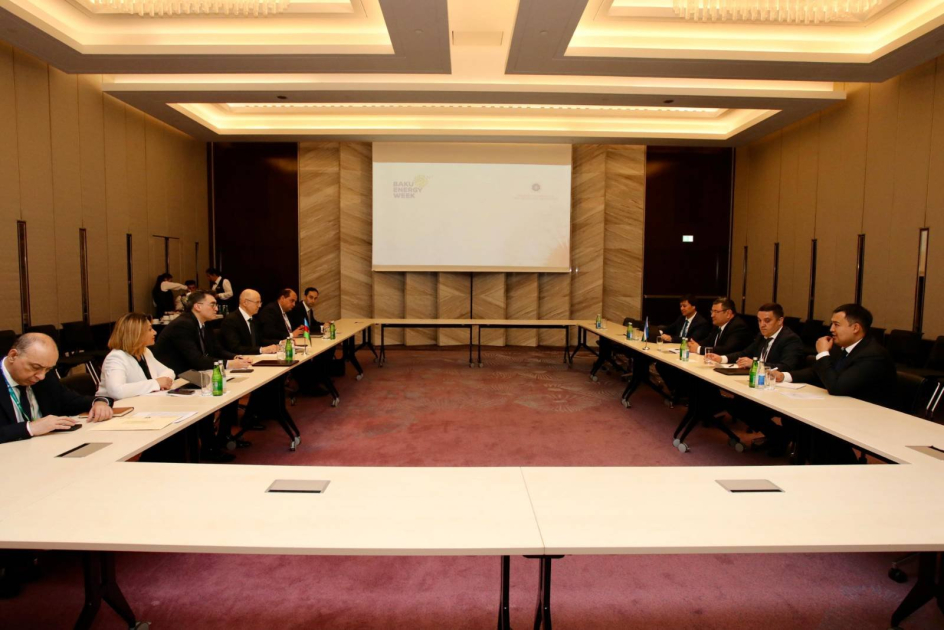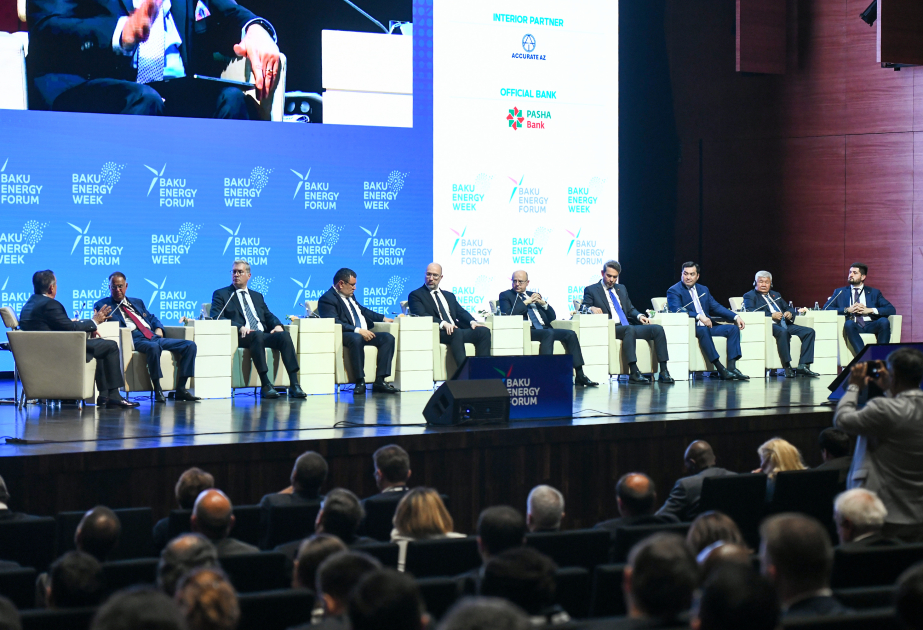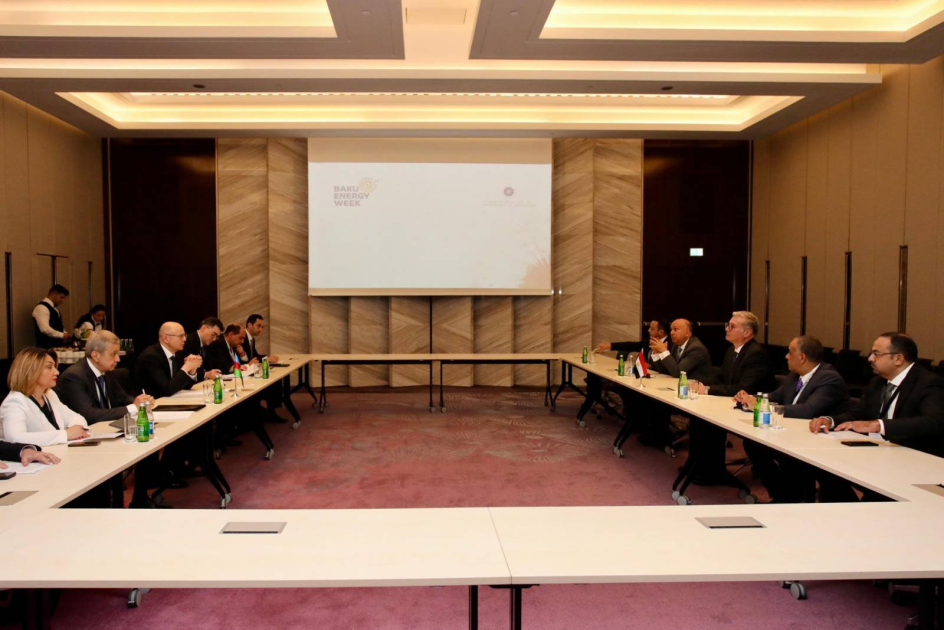

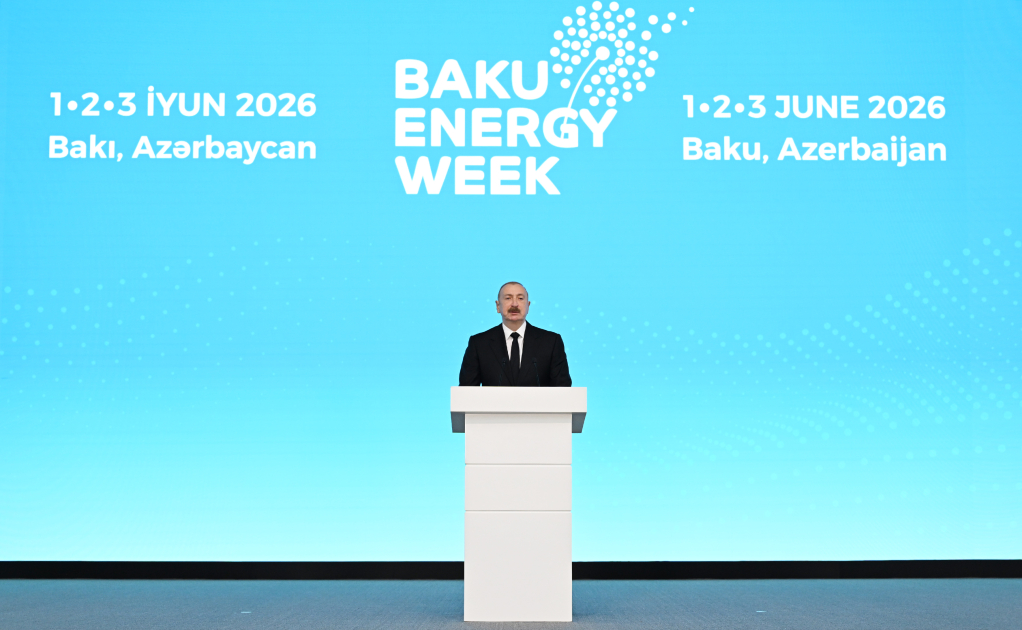
On June 1, President of the Republic of Azerbaijan Ilham Aliyev attended the official opening ceremony of the 31st International Caspian Oil and Gas Exhibition - Caspian Oil and Gas, the 14th Caspian International Clean Energy Exhibition - Caspian Power, and the 31st Baku Energy Forum, held at the Baku Expo Center as part of Baku Energy Week.
Addressing the event, Thomas Hurd, Board Advisor at the UK-based ICA Events Group, said:
- Good morning, Your Excellency Mr. President.
Distinguished ministers, excellencies, ladies and gentlemen,
On behalf of the Organizing Committee, it is a great honor and privilege to welcome you all to the 31st Baku Energy Week. We are most grateful to His Excellency Mr. Ilham Aliyev, President of the Republic of Azerbaijan, for his presence here today. It highlights the importance this event holds for Azerbaijan's energy sector and for the international community as a whole. In 1994, under the leadership of National Leader Heydar Aliyev, Azerbaijan entered a new chapter in its modern history. The first Caspian Oil and Gas Exhibition, held alongside the signing of the historic Contract of the Century, laid the foundation for the country's long-term energy strategy and established Azerbaijan as a reliable and important partner in the global energy sector. Over the past three decades, Baku Energy Week has grown into one of the leading international energy platforms in the region, bringing together heads of state, ministers, global energy companies, investors, and industry experts to discuss key priorities shaping the future of the energy industry. This year's edition holds particular significance as we mark the 30th anniversary of the Shah Deniz project, a landmark development that has made a substantial contribution to regional energy cooperation, energy security, and the diversification of energy supplies to international markets. The importance of this milestone is reflected throughout this year's program and discussions.
As you know, this year's Baku Energy Week is also accompanied by an extensive program of international events and high-level meetings, further strengthening Azerbaijan's role as an important platform for international dialogue, strategic partnership, and global cooperation. This 2026 edition brings together over 270 companies from 46 countries, including new participants and national pavilions, clearly reflecting the growing international interest in Azerbaijan's energy sector and confidence in the country's long-term strategic potential.
I would like to express my sincere appreciation to the Ministry of Energy of the Republic of Azerbaijan, SOCAR, and all our valued partners and sponsors for their continued support and contribution to the successful organization of this important event.
Allow me to congratulate all participants on the opening of the 31st Baku Energy Week and to wish you all fruitful discussions, productive meetings, and continued success throughout the week. Thank you for your attention.
I now have the great honor of inviting His Excellency Mr. Ilham Aliyev, President of the Republic of Azerbaijan, to the stage.
x x x
The head of state then delivered a speech at the event.
Speech by President Ilham Aliyev
- Good morning, ladies and gentlemen.
I welcome all the participants of Baku Energy Week and wish this great event success.
As was already mentioned, the Caspian Oil and Gas Exhibition laid the foundation for the energy development of modern Azerbaijan. As time passed, it transformed and became bigger, and now it is called Baku Energy Week, with numerous events and many very good ceremonies. As was correctly mentioned, the Shah Deniz contract, one of the biggest gas field contracts in the world, was signed almost exactly 30 years ago, in June 1996. And that actually opened a new chapter in Azerbaijan's modern gas development, providing energy security for a growing number of countries. The importance of this event is also reflected in the kind letter from U.S. President Donald Trump.
This once again demonstrates that Baku Energy Week really is one of the leading events in the global energy arena. I'm very grateful to President Trump for his kind message and also very grateful to President Erdoğan of Türkiye and UK Prime Minister Starmer for their messages to the event.
President Trump deserves additional gratitude for bringing the energy trend back to normality. As we all know, for many years countries and companies involved in oil and gas production have been demonized and sometimes blackmailed, accused of ruining the planet, and without any grounds, cornered in public opinion.
President Trump changed that trend, and that was a really remarkable event because we all know that some of the big oil companies even changed their names to be in line with so-called modern trends. But the reality is absolutely different. The world cannot live without fossil fuels. We all want to have a better climate and save the planet. We all want to live in a better environment. But today we must be very pragmatic and, based on realism, plan our future with respect to energy security while also investing in renewables. I think this is the way to move forward.
So I think that what is happening now in the global energy arena was really generated by the very wise and pragmatic policy of the U.S. President. And once again, we are all very grateful to him. Countries should not be blamed for having oil and gas because oil and gas are commodities like any other. And every country uses what it has under its soil or on the seabed in order to develop. And that was the case for Azerbaijan in the beginning of our independence. Oil and gas were the only way for us to survive as an independent country. So countries should be judged not by whether they have oil or not, but by how they use the revenues, how they invest the funds they accumulate from energy development to develop their countries, provide better living conditions for their people, and invest in green agenda issues. And I think the example of Azerbaijan can be very illustrative. It can demonstrate that when you open your country to international investment and conduct a wise policy based on national interests, you achieve success.
It was mentioned by our distinguished participant and the organizer, by the way—many thanks to the organizers—that Azerbaijan's energy development started in 1994. If we look back at 1994, we will see that Azerbaijan was in very bad shape. The country was economically totally disorganized and politically unstable. Approximately 20% of its territories were under Armenian occupation. We had 1 million refugees, and at that time this was probably one of the highest per capita rates of refugees in the world. We didn't have any funds, and we were importing electricity. We were even importing natural gas. The poverty level was more than 50%. Unemployment was widespread. And the only way for us to survive as an independent country and move forward was to use what we had—our natural resources. Azerbaijan was the first country to open the Caspian reserves to international oil companies. Since that time, a lot has happened.
If we look at Azerbaijan today and see this transformation, how we used this wealth, how we reinvested in social infrastructure, education, healthcare, and energy development, we will see that this is how countries should develop. And this is the way forward for many other countries that today suffer from more or less the same problems that we suffered from at the beginning of the 1990s.
Today, Azerbaijan's economic performance is very positive. Our ratings are improving year after year by the leading international rating agencies. And so far, we have already achieved an investment-grade rating. The poverty level has been reduced to 5%. Unemployment is around the same figure. We managed to significantly reduce foreign debt. We had to borrow in the beginning, but then our strategy was to stop borrowing and repay our debts so as not to be dependent on any international financial institution. Today, we have one of the lowest levels of foreign debt in the world, amounting to just over 6% of our GDP.
We have accumulated reserves in our State Oil Fund and Central Bank. So our reserves exceed our foreign debt by more than 18 times. All this happened, first, because we properly used our natural resources. We created a win-win situation for investors and for the host country. And we conducted a very pragmatic policy based on national interests, not listening to those who wanted to interfere or give us bad advice. We did everything based on our strategy. And all our tactical steps were based on that strategy. We built a strong army, which liberated territories that had been under occupation for almost 30 years. In just 44 days, we defeated Armenia completely and forced it to sign a capitulation act. And, of course, military victory is not about money, and it is not even about weapons. It's about spirit. But let's be honest: if we had not had the funds to build the army, we would probably still be under occupation today. So the development of Azerbaijan—whether social, economic, military, or in foreign policy—demonstrates that natural resources, when properly used, can generate many advantages.
Energy security. We all talk about that, especially now, when the crisis in the Middle East has largely damaged the energy security of many countries, producers, and consumers. We worked on that for many years. We invested heavily and initiated large-scale infrastructure projects such as the Baku-Tbilisi-Ceyhan oil pipeline, connecting the Caspian and the Mediterranean for the first time; the Baku-Supsa oil pipeline, connecting the Caspian and the Black Sea; and TANAP and TAP—the Trans-Anatolian and Trans-Adriatic gas pipelines—which, together with the South Caucasus Gas Pipeline, are part of the Southern Gas Corridor, one of the most ambitious energy infrastructure projects of our time: a 3,500-kilometer integrated pipeline system. Part of it goes across high mountains; part of it runs along the seabed. Today, it provides energy security for a growing number of countries. We initiated it, and we are grateful to our partner countries and companies that stood with us.
Today, it is difficult to imagine what the European energy market would look like without the Southern Gas Corridor. As I said, we provide gas supplies to a growing number of countries. Last year, here at Baku Energy Week, I reported to the audience that we had 12 recipient countries of Azerbaijani gas. Today, that number is 16, and 10 of them are members of the European Union. And the number will definitely grow. In terms of supplying pipeline gas to different countries and the geographical reach of those supplies, if you look at that parameter, we are number one in the world. And we will increase our gas supplies. And today, by the way, we will have a very good ceremony and the signing of several documents. In particular, I would like to highlight the Azeri-Chirag-Gunashli deep gas project, which will generate additional gas production, along with Absheron and many other projects. So our contribution to global energy security will definitely grow. The right energy policy has now allowed us to invest outside Azerbaijan. There was a time, 30 years ago, when we were attracting investors. Now we are taking our investments abroad. Today, our State Oil Company, SOCAR, is investing in the Middle East, Africa, and Central Asia. And this geography will continue to expand.
We are providing crucial transit opportunities for our friends and partners who live on the eastern shores of the Caspian. Oil from Central Asia is moving through Azerbaijan's territory to international markets. I hope the time will come when the same will be true for natural gas.
We have created a very diversified downstream capacity. Today, SOCAR's refining capacity exceeds 30 million tons. And through the recent acquisition of Italiana Petroli, our refining capacity in the Mediterranean increased from 13 million to 23 million tons. So we not only provide oil and gas, but also oil products. We also export electricity, petrochemicals, and renewable energy. This is one of the important areas of our focus. And as I said earlier, countries should not be judged by having oil, but by how they use the revenues and how they invest in renewables.
With our gas reserves, which will be sufficient for at least 100 years—not only for us but also for our clients—we actually do not need any other source of electricity generation. But our responsibility dictates that we invest in renewables. And we are doing that, together with our partners, creating very good conditions for investors, more or less the same as those that existed in the beginning of the 1990s for oil companies. Now, the same level of cooperation and investment-friendly approach is being applied to companies in the renewable energy sector.
We already have several projects in operation. By the end of next year, we will have 2 gigawatts of solar and wind capacity. By the end of 2032, we will have 8 gigawatts of solar and wind capacity. And if we add hydropower, which we are actively developing, especially in the liberated areas of Garabagh and East Zangezur, where more than 300 megawatts have already been commissioned, this represents additional potential. And this will be a supplement to oil and gas exports.
Today, we are working closely with our partners on energy cables. The Black Sea Energy Cable, which is now very close to completing its feasibility study, will stretch from Azerbaijan to Georgia, under the Black Sea, to Romania, Hungary, and many other countries. Another project, the onshore electric cable connecting Azerbaijan, Georgia, Türkiye, and Bulgaria, is also in the implementation phase. Recently, there was a very productive meeting of government officials from these countries.
We are also working on a green energy cable from the eastern shores of the Caspian to Azerbaijan, together with our partners in Central Asia.
So this is a vast geography, and connectivity is not only about transportation. Though in this area, we can also be proud of our achievements. By investing in railway and highway infrastructure, we are opening new transportation corridors and connecting the continents.
The East-West Corridor is functioning successfully. The Zangezur Corridor, which will be another branch of the East-West Corridor, will definitely be constructed based on the document signed at the White House on August 8 by the President of the United States, the Prime Minister of Armenia, and myself. So all this is a great asset for all of us.
And another issue I would like to underline is that we achieved all this through a high level of diplomatic activity. Because we are landlocked. We do not have access to oceans. So, for us to export our resources, we need to transit through other countries. And in order to do that, you have to have good relations with your neighbors and the neighbors of your neighbors. And we managed to do it.
Today, as I said, 16 countries receive gas from Azerbaijan through the Southern Gas Corridor and its extensions. So with all of these countries, we have had negotiations, agreements, disagreements, and signing ceremonies. This has created a very broad regional cooperation format—in the broadest sense of the word. And Azerbaijan, once again, was the driving force. It was our resources. It was our initiatives. It was mainly our investments that created this very broad cooperation format.
I am sure that, as always, Baku Energy Week will produce good results. We will see some of them in just a few minutes. But the discussions, interaction, new ideas, and, of course, result-oriented plans will also be beneficial for all of us. I thank you once again for being with us and wish Baku Energy Week every success.
Thank you.
x x x
Addressing the event, Caleb Orr, U.S Assistant Secretary of State for Economic, Energy, and Business Affairs, said:
- Thank you, President Aliyev. Thank you very much for your remarks on President Trump's leadership in global energy markets, which were very perceptive and farsighted.
I bring greetings from President Trump and Secretary of State Marco Rubio and wish you a great event this week.
Mr. President, Minister Shahbazov, Minister Jabbarov, Mr. Najaf, ministers, and distinguished guests,
It is an honor to be here with you today. I am delighted to join you for the 31st annual Baku Energy Week.
For over three decades, the United States and the Republic of Azerbaijan have enjoyed a longstanding partnership. Azerbaijan has been a consistent partner in advancing energy security across the region and beyond. Azerbaijan is home to the birthplace of the modern oil industry, and the Contract of the Century, signed over 30 years ago, reshaped the geography of global oil and gas markets for at least a generation.
Under our new Strategic Partnership Charter, signed by Vice President Vance and President Aliyev in February here in Baku, the United States looks forward to continuing its cooperation with Azerbaijan in developing reliable energy sources that can power the world's economies.
I would now like to share a few words from President Donald J. Trump.
“His Excellency Mr. Ilham Aliyev, President of the Republic of Azerbaijan
Dear Mr. President,
I extend my congratulations to you and the people of Azerbaijan as you host the 31st Baku Energy Week. This achievement is a testament to Azerbaijan's leadership in energy security.
Our countries have a long history of cooperation in the hydrocarbon sector and share a commitment to affordable, abundant energy. The United States has been a tremendous supporter of Azerbaijan's oil and gas industry, and I strongly believe that our foundational partnership on global energy security that will only become more essential in the years ahead.
We charted a path forward when we met at the White House and delivered lasting peace between Armenia and Azerbaijan. As you know, regional energy integration is a key pillar of the historic August 8 Peace Summit. My administration looks forward to productive discussions on this topic in June.
Together, we will advance peace, strengthen prosperity, and establish a more secure future for your region and the world. Once again, congratulations on the success of Baku Energy Week.
Sincerely,
Donald Trump.”
Caleb Orr: Thank you again, Mr. President and distinguished guests. I look forward to this week's events.
x x x
Then, Alparslan Bayraktar, Minister of Energy and Natural Resources of the Republic of Türkiye, read a letter from President Recep Tayyip Erdoğan addressed to Baku Energy Week:
“Dear participants, distinguished guests,
I greet you all with my warmest regards and sincere affection.
I am very pleased to address this distinguished forum, which has brought together global energy leaders, investors, and companies for more than 30 years, even if only through this message.
Developments in our region once again demonstrate how well-founded the steps we have taken together with Azerbaijan in the field of energy have been. We continue to successfully implement many mega projects that were once considered dreams for our region, in cooperation with Azerbaijan. Projects such as the Baku–Tbilisi–Ceyhan, Baku–Tbilisi–Erzurum, and TANAP pipelines remain among the initiatives we launched together with Azerbaijan and completed with the contributions of another friendly country, Georgia.
Through our partnerships in Azeri–Chirag–Gunashli and Shah Deniz, we see our cooperation with Azerbaijan deepening even further. Our new partnership in Shafag-Asiman serves as fresh evidence that this cooperation continues to advance without slowing down. The Igdir–Nakhchivan pipeline, which became operational last year, has strengthened and reinforced the energy supply security of the Nakhchivan region.
Electricity interconnections between Türkiye and Azerbaijan continue to hold strategic importance for us. We hope that the implementation of the Green Electricity Transmission and Trade Project among Türkiye, Azerbaijan, Georgia, and Bulgaria will contribute to the energy security of our entire region.
Likewise, the gas supply to Syria, which began last August as a result of a joint initiative by Türkiye and Azerbaijan, has made undeniable contributions to that country's development and to regional security. There are significant opportunities ahead of us to further enhance cooperation regarding the export of Turkmen gas through Azerbaijan and Türkiye. We are witnessing the increasing use of the Baku–Tbilisi–Ceyhan pipeline for transporting Kazakhstan’s natural resources to Western markets.
Distinguished participants, as Türkiye, we possess a vision aimed at ensuring effectiveness across all dimensions of energy—including renewable and green energy—while prioritizing efficiency and respect for the environment. We will reinforce our determination to be one of the leading and exemplary countries in global climate action through the COP31 Summit, which we will host in Antalya from November 9 to 20 this year.
With these thoughts, I hope that Baku Energy Week will bring positive outcomes for our countries and our region. I would like to thank everyone who contributed to the organization of this event, and I extend my warm greetings to my dear brother, President Mr. Aliyev, and to all participants.
Recep Tayyip Erdoğan
President of the Republic of Türkiye.”
Alparslan Bayraktar: Honorable President Aliyev, distinguished participants. Once again, I express my great pleasure in speaking before you at the opening of Baku Energy Week. I would like to extend my gratitude to Mr. President Ilham Aliyev and the Azerbaijani Government for showing us such warm hospitality.
Today, we are talking precisely about the supply of accessible and reliable energy. Geopolitical turmoil and wars in our region have made our situation even more difficult, and we constantly see global challenges in our energy system. The global events unfolding today have reminded us once again that energy security remains a strategic priority for all countries. Today, energy security is not limited strictly to access to resources; it is also about the reliability of supply, operational flexibility, the expansion of all capabilities, and cooperation. We are withstanding the challenges we face today. However, at the same time, we are combating newly emerging difficulties facing humanity and climate change. All of this creates opportunities for us to join efforts and find a balance among all dimensions in a proper and reliable manner. As Türkiye, we believe that we must reduce our dependence here, and we consider our plan to achieve the net-zero target by 2050 to be vital. Today, we are utilizing all available power of Türkiye, and we rank fifth across Europe, holding a leading position.
At the same time, we place our hopes on the wider use of solar energy, work on a new energy architecture, and build systems that operate in a more resilient, more flexible, and more digital format. Of course, today natural resources and energy form the basis of our markets, and many projects depend on this. This, in turn, requires the expansion of infrastructure, the making of larger investments, and, of course, the establishment of cooperation with our neighbors. Naturally, through its work with its partners, Türkiye today holds a very important and stable position in the liquefied gas and natural gas market as well. Of course, when it comes to our own gas production, this will increase over the coming years and hopefully reach a volume of 7.5 billion cubic meters; at the same time, we hope to complete the first phase of the Akkuyu Project by the end of this year.
Distinguished participants, the relations between Azerbaijan and Türkiye today are an excellent example of how cooperation and strategic value can be ensured for the entire region. Our partnership is reflected in our common history and brotherhood, and we jointly contribute to Europe's energy security.
Here, His Excellency Mr. President Aliyev recalled Baku-Tbilisi-Ceyhan, TANAP, and other projects. All of these are directed precisely at ensuring the energy architecture in the region, which has actually become a very important model for consumers, producers, and transit countries alike. We believe that our cooperation extends beyond these borders. Türkiye and Azerbaijan are also cooperating in the transmission of renewable electricity and the opening of energy corridors. We cooperate with Georgia, Bulgaria, and our other neighbors. We want to create the electricity version of TANAP. Stemming from its strategic position between the East and the West, Türkiye will continue to remain a reliable partner and continue to contribute to the implementation of energy projects in the region. Regarding the work planned for this year, we hope that Türkiye will also contribute to the ongoing climate dialogue.
I once again express my gratitude to Mr. President Aliyev and the Azerbaijani Government for receiving us today and bringing us together within the framework of this traditional event in such an important venue. Thank you.
x x x
Addressing the event, David Reed, Trade Commissioner for Eastern Europe and Central Asia of the United Kingdom, said:
- Your Excellency, President Ilham Aliyev,
Excellencies, dear ministers, and distinguished guests,
It is my pleasure to represent the United Kingdom at the 31st Baku Energy Forum during my first visit to Baku as His Majesty's Trade Commissioner for Eastern Europe and Central Asia.
I present to you a letter from Prime Minister Keir Starmer.
“Dear President Aliyev,
I am pleased to extend my warm greetings to everyone gathered for Baku Energy Week 2026. At a time of global uncertainty, Azerbaijan remains a vital partner in strengthening energy security and resilience.
When I visited Baku to attend COP29 18 months ago, I was struck by the seriousness with which Azerbaijan was approaching the energy transition. Since then, plans have become actions, with accelerating production of energy from renewable sources and ambitious solutions for transporting green energy across land and sea. Your country has played a key role in boosting Ukraine's energy resilience in the face of Russia's sustained and illegal assault on its energy infrastructure. Your country has enabled European countries to build their energy resilience by enhancing the diversity of supply chains. And in the past year, your country has begun energy exports to Armenia, underpinning your commitment to lasting peace.
As we work towards our shared climate goals, the United Kingdom remains committed to working alongside Azerbaijan to accelerate the global energy transition, which is central to this government's plans to strengthen our resilience and reach net zero by 2050. Our longstanding energy partnership, spearheaded by British industry, continues to serve as a cornerstone of our bilateral relationship and a catalyst for growth in both our countries. By combining our expertise in renewable energy and clean technologies, we can drive the innovation necessary to achieve net zero and secure a prosperous and sustainable future.
I commend your leadership on this initiative and wish you and all participants a highly productive and successful event.
Best wishes,
Keir Starmer
Prime Minister of the United Kingdom.”
x x x
Addressing the event, Cristina Lobillo Borrero, Director of Energy Security and International Relations at the Director General for Energy of the European Commission, said:
- Your Excellency, President Aliyev,
Honorable ministers, distinguished guests, ladies and gentlemen,
It's an honor to join you today for the opening of the 31st Baku Energy Week.
The current crisis in the Middle East has once again brought energy security to the forefront of global affairs. After having just come out of the acute energy supply crisis following Russia's invasion of Ukraine, we now face a new crisis. In Europe, it's defined less by shortages of supply but more by volatile prices.
The European Union remains fully committed to our decarbonization target for 2050. While advancing on that pathway, today we are still dependent on fossil fuels, and we are net importers of gas and oil. And we are affected by both price fluctuations and supply vulnerabilities. In this context, reliable partnerships matter greatly. Azerbaijan has a crucial role as an energy partner and as a part of the European Union's broader connectivity agenda. Let me therefore thank Azerbaijan for bringing together today governments, industry, investors, and technology providers for this very important event.
For many years, this forum has been a recognized world meeting point for the energy sector. Not only for the Caspian region but also for Europe and the wider international energy community. Baku has a long and distinguished energy history. But it's also a place where the future of energy partnerships is being discussed. For the European Union, when it comes to energy security, diversification has become a strategic priority. Azerbaijan and the Caspian region have significantly contributed to this effort, including through the Southern Gas Corridor, which has helped strengthen the resilience of Europe's energy supplies. This contribution is very much valued. Since 2021, the European Union has increased its imports of Azerbaijani natural gas by more than 40%. And just this January, the Trans Adriatic Pipeline saw its first capacity expansion by 1.2 BCM this year, which will enable additional gas delivery to the European Union in 2026.
But today, strong partnerships are not measured by volumes only. They are also measured by reliable delivery, high operational standards, efficient use of resources, transparent frameworks, and environmental performance, including methane mitigation. Yet, our cooperation with Azerbaijan is also highly important in the field of renewable energy and interconnectors. We closely follow the planned Caspian-Black Sea-Europe Green Energy Corridor, which is part of a broader discussion on future connectivity between the Caspian region, the South Caucasus, and Europe.
The next essential step for this project is the assessment under the European Union's Framework for Projects of Mutual Interest, and the intention of all participating countries to apply for this Project of Mutual Interest status later this year is a very important milestone.
Looking ahead, the strongest energy partnerships will be those that combine reliability today with readiness for tomorrow. This means commercially sound infrastructure, predictable investment conditions, resilient supply chains, and technologies that support both energy security and the energy transition.
The European Union wants to continue cooperation with Azerbaijan in this spirit—with openness, pragmatism, mutual benefit, and a shared commitment to secure, affordable, and increasingly sustainable energy. This forum today brings together the actors who can turn that ambition into practical cooperation. I wish all participants a successful event, and I look forward to the partnership and discussions that will emerge from it.
Thank you very much.
x x x
Addressing the event, Philip Mshelbila, Secretary General of the Gas Exporting Countries Forum, said:
- Your Excellency President Ilham Aliyev,
Distinguished ministers, heads of international organizations.
It is my great honor to address this opening ceremony of Baku Energy Week 2026 in this very historic city of Baku, a city whose name is written into the foundation of the modern energy industry. Allow me first of all to warmly congratulate the government and people of the Republic of Azerbaijan on the occasion of the 108th anniversary of Azerbaijan's National Day last week. I wish you all continued prosperity, growth and success under the leadership of His Excellency President Ilham Aliyev.
Today, Azerbaijan is writing a new chapter in this long energy history, from oil to natural gas and now to renewables. Azerbaijan has shown that energy leadership is not about standing still, it is about adapting to change, investing in the future, connecting markets and building trust, very importantly. Through its balanced approach to natural gas and renewable energy and through extensive international energy cooperation, Azerbaijan has become a reliable and strategic energy partner. Its gas, as has been said, now reaches about 16 countries and that number is growing. This makes the country number one in terms of its reach. At the Gas Exporting Countries Forum, we highly value Azerbaijan's participation in our work. As one of the important natural gas exporters, Azerbaijan brings valuable experience to the dialogue among producing countries. We would be honored to see that this engagement is further deepened in a manner that reflects Azerbaijan's growing role in both regional as well as global gas markets.
The GECF brings together leading gas exporting countries that currently account for around 70% of global proven natural gas reserves, more than 40% of marketed gas production and half of global LNG exports. With this collective weight comes a responsibility to promote constructive dialogue, to support informed decision-making among our stakeholders and contribute to a realistic evidence-based understanding of the role of natural gas in global energy security, sustainable development and inclusive energy transitions. And we refer to transitions in the plural. Recently, ladies and gentlemen, we published our Global Gas Outlook 2055. And here we take a 30-year outlook. And I'd just like to cite five highlights from this report.
First, natural gas strengthens its role in the global energy mix. Global natural gas demand is projected to increase by around 31% by 2055, rising from about 4.1 TCM in 2024 to around 5.4 TCM in 2055. Its share in the global energy mix increases from about 23% to 26%, meaning it's going to retain a firm one-quarter of the global energy mix. Second point, power generation is the main sectoral driver of gas demand growth. Electricity's share of final energy demand rises from 22% in 2024 to 32% by 2055. As a result, the power sector accounts for more than half of incremental natural gas demand, reflecting the need for firm, flexible and dispatchable capacity in increasingly electrified energy systems. Number three. Demand growth is concentrated in emerging and developing regions. Developing Asia Pacific, the Middle East, Eurasia and Africa lead global gas demand growth. Developing Asia Pacific alone accounts for about 43% of the net increase in global gas demand by 2055. This is going to be driven by economic growth, industrialization, urbanization and rising electricity needs.
Number four, supply. Natural gas supply shifts toward new regional centers. Future supply growth is increasingly led by conventional resources, which are likely to be cited in the Middle East, Eurasia and Africa, accounting for around 80% of incremental supply over the outlook period and marking a shift away from the shale-led growth phase that we have experienced. These regions become central to meeting rising global demand supported by long-cycle upstream projects, brownfield optimization and supply diversification. And the fifth point. The gas trade continues to expand with LNG in the lead. The share of traded gas in global demand rises from about 29% in 2024 to nearly one-third by 2055. LNG becomes the dominant growth engine in gas trade, accounting for nearly two-thirds of traded gas, with LNG volumes expected to double over the outlook period.
Excellencies, ladies and gentlemen, Baku Energy Week is convening at a time when the global energy system is being reshaped by geopolitical developments and expectations for sustainability. And all this is happening at a time when energy demand continues to rise. This reality reminds us that the energy security that we're all seeking cannot be achieved through short-term reactions alone. It must be built through long-term vision, sustained and timely investment, resilient infrastructure, diversified routes and markets, and effective cooperation amongst producers, consumers and transit countries. This is why security of supply and security of demand are two sides of the same coin. Future energy security will depend not only on the availability of resources, but also on the shared commitment of producers and consumers to bring those resources to markets reliably, affordably and sustainably. This is also where natural gas and renewables complement each other. They are actually partners in balanced, realistic, just and inclusive energy transitions. Renewables will continue to expand rapidly, while natural gas will provide the flexibility, reliability and resilience that is required by modern energy systems. And it does this by mitigating the intermittency of renewables.
Azerbaijan offers a practical illustration of this smart strategy. Expanding renewable energy can reduce domestic gas burn, support economic growth, and create additional opportunities for natural gas to contribute to regional and global energy security. At the same time, gas infrastructure, interconnections and long-term cooperation remain essential to ensure that energy can move efficiently from sources to markets. In this spirit, Baku Energy Week provides an important platform for energy dialogue, international cooperation and practical solutions at a time when the world needs all three. I commend the government of the Republic of Azerbaijan and the organizers for convening this important gathering, and I wish Baku Energy Week 2026 every success.
Thank you.
x x x
Addressing the event, Francesco La Camera, Director General of the International Renewable Energy Agency, said:
- Mr. President, Ministers, Excellencies, good morning, everyone.
It is my great pleasure to join you today for the opening of Baku Energy Week. I would like to express my sincere gratitude to my dear friends, Minister of Energy of Azerbaijan Parviz Shahbazov, for bringing us here together under the leadership of President Ilham Aliyev at such a pivotal moment.
Energy security is once again a top global priority and can no longer depend on systems that are vulnerable to geopolitical shocks. The most secure unit of energy is the one that can be produced domestically, competitively and without exposure to geopolitical disruption. Recent events have reminded us how quickly disruption in energy markets can reverberate across economies, industries and households around the world. This is a clear priority for governments and industry, accelerating the shift to reliable, affordable, domestically sourced renewable energy while strengthening competitiveness and resilience in an increasingly uncertain world. You know, this has been described as the most severe energy crisis of my lifetime. We have a different reading of it. We have seen proposed decalogue measures that look very much like the same responses to the energy crises of the past. But this is a turning point. The world will be different. We have to be prepared for it. This is the reason that we, as IRENA, are trying to offer some short-term responses while linking them to a vision for a new energy system that is inevitably emerging. In this context, IRENA recently issued a policy advisory outlining strategic action to strengthen immediate resilience and enhance long-term energy security. The message is clear. Action is needed across three horizons. In the short term, the priority is to reduce exposure. In the medium term, the focus must shift to removing structural bottlenecks, as, for example, has been said, interconnectivity and grids. Lastly, in the long term, the goal is to build energy systems that are secure by design through electrification, investment-ready framework, and strong alignment between infrastructure, industry, and finance.
While regions face different realities, our shared priorities remain clear, tripling renewable capacity, doubling energy efficiency by 2030, and advancing commitments on grids, storage, and sustainable fuels. The relevance of this agenda is particularly evident in regions undergoing rapid economic growth and infrastructure development. Central Asia possesses abundant natural resources and vast renewable energy potential. Its strategic locations, together with efforts to establish green energy corridors, connecting neighboring regions creates major opportunity for growth. I commend Azerbaijan for its leadership in placing renewable energy at the center of his national agenda, including its ambition to deliver two gigawatts of the green energy project by 2027, as has just been said. I would like also to highlight Azerbaijan's active role in IRENA’s governance, being a member of our council for 2026, and Vice-Chair of the 17th IRENA assembly in 2027.
In addition, Azerbaijan plays a key role in launching IRENA’s Accelerated Partnership For Renewable Energy in Central Asia (APRECA) at COP29 in Baku. And we are already working with our friends from Türkiye, including the Minister present here, and the President of COP, and I hope—indeed, I am sure—that we can replicate the same success we achieved in cooperation with Azerbaijan, with your Minister and your colleague Mukhtar Babayev, who played the role of President of COP29.
This afternoon, together with the Minister of Energy of Azerbaijan, we are convening a high-level dialogue for ministers to exchange views on scaling renewable energy projects, investment in energy transition technologies, and infrastructure under the APRECA framework. We have received more than 600 projects to be considered for funding. That's amazing for the region. My last comment is this: if last year we installed 700 gigawatts of renewable energy capacity, I would always like to remind people that this means, also considering efficiency, capacity factors, and everything else, that in one year we have installed the same electricity capacity as was installed during 70 years of nuclear power development. It's just the same: one year versus 70 years. And if every year 90 percent of newly installed power-generation capacity has been renewable over the last five years, this means that the energy system is changing, inevitably. And my last thought is the same. I'm trying to insist on this, and every time I have the chance to talk in public, the question is not that renewables are clean. We know they are. We know that socially they can be more acceptable because they create three times more jobs than comparable investments in other energy sources. But the most important thing I'm insisting is that the competitiveness of the economy of tomorrow will be largely determined by the capacity of the energy system to provide the economy with electrons and molecules at the lowest possible cost. It is only possible with renewables.
Thank you very much.
x x x
Addressing the event, Gordon Birrel, bp's Executive Vice President for Production and Operations, said:
- Your Excellency President Aliyev,
Distinguished guests, ladies and gentlemen, ministers, dear friends,
It is my very real pleasure to be back in Azerbaijan, my home for many years, and a place that always feels very special to me. We meet to celebrate the first commercial gas at ACG, the work of a great many people. Yet, in a larger sense, we are here today because of one man's vision. Here was the challenge faced by National Leader Heydar Aliyev all those years ago. A newly independent country with an oil industry desperately in need of modernization. His vision was to see Azerbaijan restored to its rightful place as a great energy-exporting nation. The plan was to open up, bring in capital, bring in expertise, build a new industry from the ground up. And that vision is what brought my company to Baku 32 years ago, to sign the Contract of the Century. Since then, ACG has produced around 4.6 billion barrels of oil for export to the markets of the world. Together, we built a skilled energy workforce, over 90% of bp's team here in Azerbaijan are Azerbaijani nationals.
Baku's skyline has grown higher and brighter under the leadership of President Aliyev. And Azerbaijan has become a cornerstone of the world's energy security. Which brings me to our latest project. The original ACG production sharing agreement didn't cover the development of non-associated gas. That's because the markets and infrastructure didn't yet exist. We had to build them. Now, through the addendum we signed two years ago, we can access an estimated 4 to 6 trillion cubic feet of recoverable reserves. And today, we press the button on the start of operations. So, first, I want to acknowledge the incredible work of our team and partners in getting us here.
ACG is a giant and complex field, among the world's largest. The non-associated gas exists in formations above and below the oil. And as a nice bonus, at the bottom of the deeper reservoir, we've discovered a thin rim of oil between the gas and the water. All of this demands great technical skill, to read the rock, to plot a pathway for the wells, to integrate new gas systems with existing oil infrastructure, to operate complex technology, like horizontal drilling or advanced geosteering. To do all this safely, efficiently and reliably. And so, I pay tribute to our bp Azerbaijan team, to SOCAR, to our partners in the ACG project, and also our hundreds of local and international contractors. This is a true international team effort. I also want to thank President Ilham Aliyev and the government of Azerbaijan.
For any nation, abundant oil and gas are a blessing. But it's never enough on its own. A truly great hydrocarbon sector requires patience and a readiness to invest. The ability to think in decades, not just annual budget cycles, which is exactly what you have here in Azerbaijan. Visionary leadership, a brilliant national partner in SOCAR, a smart ministry and regulator, always open to new ideas about how to lift more barrels. Which brings me to the future.
Today, we have 10 world scale offshore rigs running in the Caspian Sea. And they will go on for many, many years to come. We have a healthy project pipeline. Work to keep us busy for years to come. And that's exactly how we like it. There's the Shahdeniz compression project. Local yards today are fabricating the platforms as we speak. This is a $2.9 billion investment. There's the Garabagh Field, ACG's first subsea tieback. We're also building a facility to make the pipelines and cables in a single bundle, the first of its kind here in the Caspian. And then there's the solar project at Jabrayil. This will help electrify the Sangachal terminal and free up gas for export. We're also proud to make a contribution beyond energy to help build capability in universities, environmental programs and cultural institutions across the land. That is what partnership means to us. It's about working together to shape the future. And that's not all. Azerbaijan has long been the Caspian's premier producer. I believe it can be greater still. A new Silk Road linking production in Central Asia to markets in Europe and beyond.
bp has just recently signed its first production sharing agreement in Uzbekistan. Accessing six new blocks operated by SOCAR. And as bp, we've agreed to evaluate and potentially develop in Kazakhstan. We know how to build energy corridors. We know how to link platforms, pipelines, terminals and customers. We also know how to build strong and enduring partnerships. Together, we can do even more.
Your Excellency, ladies and gentlemen, there is plenty of work ahead. But today we celebrate. We celebrate new gas production, new opportunities for ACG and new data that will tell us more about the potential of this incredible field. We also celebrate the care and skill of our people, the friendship between your nation and bp, the talent and teamwork, the vision and the plan that make it happen. And we never forget what it's all about. Keeping the lights on, keeping the world moving and growing. A stronger and more secure energy system.
Thank you.
x x x
Addressing the event, Rovshan Najaf, President of SOCAR, said:
- Your Excellency, Mr. President, distinguished guests, today we are witnessing the beginning of a new chapter in the history of the Azeri-Chirag-Gunashli field. With the commencement of the first non-associated gas production, one of the world's most important offshore energy projects is entering a fundamentally new phase of long-term growth and strategic value creation. It is a strategic milestone that marks ACG's transformation from a major oil-producing asset into an integrated energy project, continuing to create new opportunities for Azerbaijan and its partners. For more than three decades, ACG has been globally recognized primarily as a major oil-producing asset and an important source of associated gas. The commencement of non-associated gas production now demonstrates the project's continuing ability to unlock new potential, support long-term energy security, and reinforce Azerbaijan's role in international energy markets.
Distinguished participants, at the same time, this new phase demonstrates Azerbaijan's growing capability in mature field redevelopment, brownfield optimization, and integrated offshore development. The experience gained through ACG positions Azerbaijan as an increasingly important center of expertise for long-term resource recovery. Equally important, this new phase is being implemented through the efficient utilization of existing infrastructure, advanced drilling technologies, and integrated offshore development solutions. This significantly enhances both economic efficiency and long-term sustainability of the project. At a time when energy markets and energy security and supply sustainability remain critically important, Azerbaijan continues to demonstrate its role as a reliable, long-term, and responsible energy supplier for the region.
Ladies and gentlemen, the achievement we celebrate today is a result of visionary strategy, strong international partnership, and many years of dedicated collective effort. First and foremost, I would like to express our deepest gratitude to His Excellency Mr. President Ilham Aliyev for his wise and farsighted leadership. The successful implementation of this important project once again reflects the strategic vision and continuous attention of His Excellency towards the sustainable development and long-term strengthening of Azerbaijan's energy sector. For each member of our team, it is a great privilege and at the same time an honorable responsibility to contribute to the further development of our company under the guidance of Mr. President, who was the source of transformation of SOCAR from a domestic oil company to an international energy company, in his capacity as the senior management of SOCAR, personally participating in and overseeing the execution of the most important regional oil and gas projects.
I would also like to express my sincere appreciation to all our international partners, stakeholders, engineers, geologists, technicians, and all specialists whose professionalism, commitment, and teamwork made this important milestone possible. The first non-associated gas production from ACG is more than an operational achievement. It's a powerful demonstration that even after more than 30 years of successful production, ACG continues to reveal new opportunities, generate new strategic value, and contribute to Azerbaijan's long-term development.
Thank you for your attention.
x x x
Then, a ceremony was held to mark the commencement of first non-associated gas from the "Azeri-Chirag-Gunashli" block of fields.
x x x
The event proceeded with the signing of documents.
SOCAR President Rovshan Najaf, Chairman of the Board and General Manager of BOTAŞ Abdulvahit Fidan, TotalEnergies Senior Vice-President for Europe, Exploration and Production Martina Opizzi, and President of the International Gas at XRG Mohamed Al Aryani signed the “Agreement on the natural gas sales and purchase from the Absheron field between State Oil Company of Azerbaijan Republic (SOCAR), TotalEnergies EP Absheron B.V., SOCAR Absheron, ADNOC International Project Co 1 RSC Limited and BOTAŞ Boru Hatları İle Petrol Taşıma A.Ş.”
SOCAR President Rovshan Najaf and EPS Director General Dušan Živković signed the “Term Sheet on the Niš gas turbine power plant project in Serbia between State Oil Company of Azerbaijan Republic (SOCAR) and Joint stock company Elektroprivreda Srbije Belgrade (EPS).”
SOCAR President Rovshan Najaf and Shell Executive Vice President for Acquisitions, Divestments and New Business Development Walid Hadi signed the “Memorandum of Understanding between State Oil Company of Azerbaijan Republic (SOCAR) and Shell Overseas Holdings Ltd.”
SOCAR President Rovshan Najaf and AASS Director General Marcello Forcellini signed the “General Agreement concerning the delivery and acceptance of natural gas between SOCAR Trading Gas & Power SARL and Azienda Autonoma Di Stato Per I Servizi Pubblici (AASS).”
SOCAR President Rovshan Najaf and COMSTOCK Vice President of Finance and Investor Relations Ron Mills signed the “Memorandum of Understanding between State Oil Company of Azerbaijan Republic (SOCAR) and Comstock Resources, Inc. (COMSTOCK).”
SOCAR President Rovshan Najaf and J.P. MORGAN SECURITIES PLC Vice President for Loans and Structured Credit for Central and Eastern Europe, the Middle East and Africa Martynas Saltenis signed the “Memorandum of Understanding between State Oil Company of Azerbaijan Republic (SOCAR) and J.P. Morgan Securities Plc.”
SOCAR President Rovshan Najaf and Chevron President for Eurasia Business Derek Magness signed the “Joint Study Agreement between State Oil Company of Azerbaijan Republic (SOCAR) and Chevron Caspian Exploration B.V.”
SOCAR President Rovshan Najaf and Apollo Capital Management, L.P. Managing Director for Credit and Principal Structured Finance Jonathan Bar signed the “Memorandum of Understanding between State Oil Company of Azerbaijan Republic (SOCAR) and Apollo Capital Management, L.P.” and the “Investment Support Agreement between State Oil Company of Azerbaijan Republic (SOCAR), SOCAR Türkiye Enerji A.Ş, SOCAR CASPIAN HOLDING LTD and AP CASPIAN ISSUER LLC.”
SOCAR President Rovshan Najaf and Assistant Dean for Global Initiatives at the George Washington University Sevinj Mammadova signed the “Letter of Intent for Collaboration between State Oil Company of Azerbaijan Republic (SOCAR) and The George Washington University.”
SOCAR President Rovshan Najaf and Haimaker.ai Inc CEO Su Le signed the “AI Cloud Development and Cooperation Agreement between State Oil Company of Azerbaijan Republic (SOCAR) and Haimaker.ai Inc.”
Minister of Economy of the Republic of Azerbaijan Mikayil Jabbarov and U.S. Assistant Secretary of State for Economic, Energy and Business Affairs of the United States of America Caleb Orr signed the “Azerbaijan - United States Framework for Securing of Supply in the Mining and Processing of Critical Minerals and Rare Earths.”
x x x
President Ilham Aliyev signed the exhibition's guest book.
x x x
Subsequently, the head of state viewed the exhibitions.
Baku Energy Week, which will continue until June 3, stands as one of the most prestigious energy events in the Caspian region, bringing together global energy leaders, the world's leading energy companies, government agencies, investors, and industry experts.
This event, which is the logical continuation of the "Caspian Oil and Gas" exhibition founded at the initiative and with the support of National Leader Heydar Aliyev, has established itself as a reliable energy platform at both the regional and international levels over the years of its organization.
Baku Energy Week combines three prestigious events: the 31st International Caspian Oil and Gas Exhibition - Caspian Oil and Gas, the 14th Caspian International Clean Energy Exhibition - Caspian Power, and the 31st Baku Energy Forum.
For many years, the Ministry of Energy of the Republic of Azerbaijan has provided support to the events held within the framework of Baku Energy Week, while SOCAR acts as the main partner.
This year's event features 276 companies from 46 countries around the world. This is a record indicator in the history of the exhibition in terms of the number of countries. Germany and Russia are represented with national pavilions at Baku Energy Week. Foreign companies constitute approximately 60 percent of the exhibition participants, while local enterprises make up 40 percent.
Regular participants account for 40 percent of the total exhibition space.
The region's largest energy company, the State Oil Company of the Republic of Azerbaijan (SOCAR), is engaged in exploration, production, transportation, processing, chemical production, marketing, retail fuel sales, gas distribution, and the development of renewable energy sources. SOCAR operates in more than 15 countries worldwide. The company expands our glorious oil and gas heritage through innovative technologies. SOCAR successfully contributes to sustainable development and energy security in local, regional, and international contexts. According to its Corporate Strategy up to 2035, SOCAR's long-term goals are to become a modern energy company that develops its operations through digitalization, innovation, and the green energy transition.
bp Azerbaijan, a global energy company, is one of the largest international partners in our country's energy sector and serves as the operator of the main oil and gas fields located in the Caspian Sea. The company operates as the operator of the "Azeri-Chirag-Gunashli" (ACG) oil field and the "Shah Deniz" gas-condensate field. The produced hydrocarbons are processed at the Sangachal terminal, which is considered bp's strategic hub in the region, and are transported to international markets via the Baku–Tbilisi–Ceyhan (BTC) pipeline, the South Caucasus Pipeline, TANAP, and TAP. The company is currently implementing projects at ACG including the ACE platform, the Shah Deniz Compression project, the Shafag-Asiman structure, as well as the electrification of platforms and initiatives in the direction of green energy. bp also pays special attention to the development of local workforce in Azerbaijan. Local specialists make up the vast majority of bp Azerbaijan's employees.
TotalEnergies is one of France's largest energy companies in the fields of oil and gas, LNG, renewable energy, and electricity. Positioned among our country's primary international energy partners, the company has been operating in Azerbaijan since 1996. TotalEnergies holds a 5 percent share in the Baku–Tbilisi–Ceyhan (BTC) pipeline and is one of the main participants in the Absheron gas-condensate field. The company holds a 35 percent share in this field and implements the project jointly with SOCAR. Production for the first phase of the Absheron field began in July 2023. Currently, the production capacity stands at 4 million cubic meters of gas and 13,000 barrels of condensate per day. This gas is directed to Azerbaijan's domestic market. In 2025, the partners launched the front-end engineering design (FEED) phase for the full-scale development of the field. The next phase of the project envisions an additional daily production volume of 110,000 barrels of oil equivalent during the peak production period. The company is simultaneously expanding cooperation in Azerbaijan toward energy transition, decarbonization, and green energy.
Acwa renewable energy company of the Kingdom of Saudi Arabia is one of the world's largest private operators in seawater desalination, as well as a leading company in green hydrogen technologies and global energy transformation. Established in 2004, Acwa currently operates in 15 countries, including the Middle East, Africa, Central Asia, and Southeast Asia. The company's portfolio includes more than 100 projects in the energy and water sectors with a total investment value exceeding 117 billion US dollars. In Azerbaijan, Acwa primarily operates in green energy and is one of the key international partners in the country's energy transition strategy. The company is the investor in the 240 MW wind power plant located in the Khizi and Absheron districts. This project is one of Azerbaijan's first large-scale, foreign-invested renewable energy projects. Acwa also cooperates with SOCAR on wind energy and green hydrogen projects in the Caspian Sea.
SLB, a company from the United States of America, is a global technology company in the energy sector. As one of the world's largest oilfield services and energy technology companies, SLB has maintained its leading position in the energy sector for over a century by turning the industry's most complex challenges into technological innovations. Today, SLB works in the fields of oil and gas exploration, drilling, well completion, geophysics, digital technologies, and energy transition solutions. The company has been operating in Azerbaijan for many years and is among the main technological partners in large-scale projects such as ACG and Shah Deniz. Within the framework of cooperation with bp and SOCAR, SLB provides drilling, maintenance, automation, and digital solutions. In recent years, the company has also paid special attention to emissions reduction, digitalization, and sustainable energy technologies.
The XRG company of the United Arab Emirates, which is the international energy investment company of ADNOC, has built a global portfolio in the fields of natural gas, the chemical industry, and energy solutions. Established in 2024, the company is currently expanding its operations in LNG, gas infrastructure, low-carbon energy, green hydrogen, and energy transformation. In Azerbaijan, as part of ADNOC's regional cooperation strategy, the company is developing cooperation with SOCAR on energy transition, gas infrastructure, and low-carbon projects, thereby reinforcing its strategic position in the global energy market.
Uzbekneftegaz, the national oil and gas company of Uzbekistan and one of the largest state energy companies in Central Asia, operates in the fields of oil and gas exploration, production, processing, petrochemical production, and energy infrastructure. Having made large investments in gas processing, petrochemicals, and energy efficiency projects in recent years, Uzbekneftegaz is expanding its cooperation with international partners. In Azerbaijan, the company primarily participates within the framework of regional energy cooperation and international energy platforms, strengthening experience exchange and partnership on energy projects with SOCAR and other companies.
The total capacity of the global project portfolio of the United Arab Emirates' Masdar company today exceeds 50 GW. The company plans to increase this indicator to 100 GW by 2030. Currently standing as one of the leading participants in the global energy transition, Masdar is among the most active international partners in Azerbaijan's green energy sector. The company is the investor in the 230 MW "Garadagh" Solar Power Plant, which is the country's first large-scale industrial solar power plant. As one of the core partners of our country's green energy strategy, Masdar cooperates with SOCAR and the Azerbaijani Government toward developing solar and wind energy projects with a total capacity of several gigawatts.
Established in 1973, China Petroleum Pipeline Engineering company carries out the construction of oil and gas pipelines. The company simultaneously specializes in energy storage and transportation infrastructure, executing more than 70 percent of the total volume of long-distance pipeline work in China. It operates across the full industry chain, including research and development, engineering, consulting, construction, and commissioning. The company's international operations span over 50 countries, with its main focus areas including oil and gas pipelines, compressor stations, LNG terminals, and energy infrastructure projects. Currently, the company is considering establishing cooperation with SOCAR as a potential partner.
Türkiye’s national oil company, "Türkiye Petrolleri Anonim Ortaklığı" (TPAO), is a global energy company with more than 70 years of experience in hydrocarbon exploration and production. With an extensive international project portfolio operating in Azerbaijan, Iraq, Libya, Pakistan, Somalia, and other countries, the company is engaged in oil and gas exploration, production, drilling operations, and energy project management. The company has been operating in Azerbaijan since 1994 and holds participating interests in the Shah Deniz, Azeri-Chirag-Gunashli, South Caucasus Pipeline, Baku–Tbilisi–Ceyhan, and Shafag-Asiman projects. Playing an important role in the development of energy cooperation between Azerbaijan and Türkiye, the company participates in vital projects for the region's energy security, and has defined the principle of sustainable development and environmental responsibility as one of the core directions of its long-term strategy.