

The world’s most advanced climate models can reproduce extreme heatwaves once they’re underway. However, they consistently miss the atmospheric warning signals that precede them by days.
A new study has found that the early warning processes that set heatwaves in motion are poorly captured by the models that scientists and policymakers rely on most.
Those processes can begin thousands of kilometers away before a heatwave develops.
The gap has real consequences for how far in advance dangerous heat events can be anticipated.
In a region where summer heat already kills, the difference between three days’ warning and seven could be measured in lives.
Testing the world’s leading models
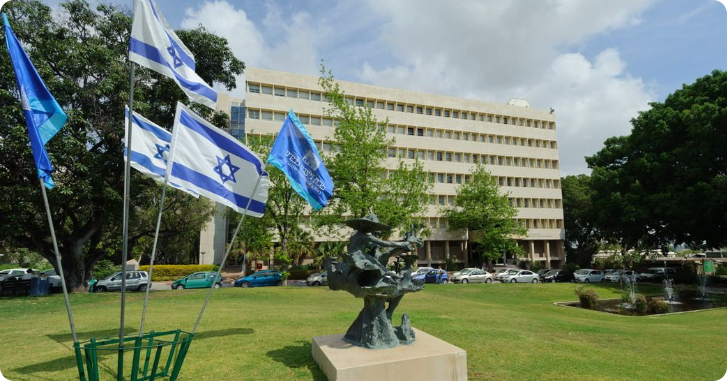
The research was led by Andre Klif, Chaim I. Garfinkel, Dorita Rostkier-Edelstein, and Assaf Hochman from the Hebrew University of Jerusalem.
The team analyzed 11 state-of-the-art climate models used in assessments by the Intergovernmental Panel on Climate Change (IPCC).
They compared the models’ simulations against atmospheric observations across the Eastern Mediterranean and Middle East.
This is one of the fastest-warming regions on the planet and one of the most exposed to the kind of sustained extreme heat that strains everything from hospitals to power infrastructure.
Missing the earliest warning signs
There’s an important distinction buried in these findings. The climate models aren’t wrong about heatwaves in any simple sense.
They reproduce the events themselves, including the temperatures, duration, and broad patterns.
What they struggle with is the buildup: the days before the peak and the subtle atmospheric shifts that, in the real world, are already signaling what’s coming.
Heatwaves in the Eastern Mediterranean don’t just appear. They are the end product of a chain of events that can take a week or more to unfold, involving circulation patterns over Europe, Turkey, India, and parts of Africa.
Wind patterns shift, high-pressure systems strengthen, and warm air finds a pathway toward the region, gradually flowing in. By the time temperatures spike, the atmosphere has been rearranging itself for days.
The models examined in the study frequently delayed, weakened, or missed these precursor signals entirely.
That means even when a model eventually produces a realistic heatwave, it may be doing so for the wrong reasons.
Heatwaves begin far away
One of the more striking findings involves the South Asian monsoon. Observational data show that atmospheric changes over India help set up conditions favorable for extreme heat in the Eastern Mediterranean.
None of the 11 climate models tested captured that relationship.
Another key driver is a strengthening high-pressure ridge over Turkey. The models that represented this feature more accurately also tended to do a better job reproducing the intensity of observed heatwaves.
That suggests getting this one piece right carries consequences throughout the rest of the simulation.
It’s a reminder that regional extreme weather is rarely a local story. The atmosphere operates at scales that cross continents, and models that treat each region in relative isolation will keep missing things.
When good models mislead
This is perhaps the most unsettling part of the study. A model can produce realistic heatwave statistics, including the right frequency and roughly the right intensity.
However, the model can still get the underlying atmospheric dynamics wrong.
It arrives at the correct answer through the wrong process. That matters because it erodes confidence in what the models are actually telling us.
If the mechanisms are misrepresented, projections of how heatwaves will change in a warmer future become less reliable, even when the headline numbers look reasonable.
You can’t trust a forecast built on the wrong physics, even if it happens to match past observations.
The researchers propose a process-based framework for evaluating climate models. Instead of focusing only on the outcomes, it examines the atmospheric dynamics responsible for generating extreme events.
Instead of asking whether a climate model produces the right number of heatwaves, it asks whether the model produces them for the right reasons.
Improving heatwave forecasts
Heatwaves are among the deadliest natural hazards on Earth. In the Middle East and Mediterranean, they are already straining power grids, depleting water supplies, damaging agriculture, and killing people.
The ability to see one coming several days in advance, rather than only recognizing it once it has arrived, is not an academic concern.
The study doesn’t suggest that climate projections are fundamentally broken.
What it does argue is that the field needs to look more carefully at the machinery inside the models. Researchers cannot focus only on the outputs they produce.
Better forecasting of extreme heat depends on capturing the earliest atmospheric signals. These quiet shifts in pressure and wind begin days before anyone feels anything unusual. By then, they’re already setting the stage for a heatwave.
Right now, the best tools available are mostly missing those signals. Understanding why is where the work needs to go next.
The study is published in the journal Weather and Climate Extremes.
—-
Like what you read? Subscribe to our newsletter for engaging articles, exclusive content, and the latest updates.



.jpeg)