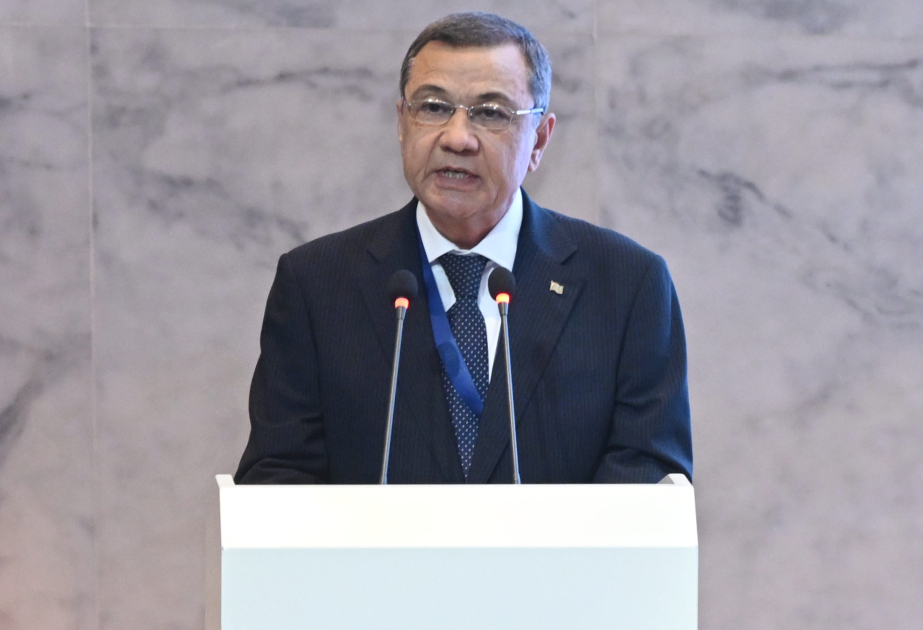

Speaking at the international forum “Strengthening the Role of Youth in the Postcolonial Era,” organized by the Baku Initiative Group in Baku, Brian Ngigi, a Kenyan editor at the Climate Advisory Bureau for Africa, highlighted the ongoing impact of colonialism.
He noted that although colonialism has formally ended, its structural consequences continue to manifest in various forms. According to Ngigi, neocolonialism is now expressed not through direct political control, but through economic dependence, unequal partnerships, and external influence mechanisms.
Ngigi emphasized that in many African countries, the continued export of raw materials essential for modern technologies, coupled with the import of finished goods at higher prices, remains a major obstacle to economic development.
He also pointed out that while large-scale infrastructure projects and international investments are important for progress, they may raise concerns regarding long-term financial sustainability and their impact on strategic assets.
“It is important to approach these issues in a balanced and constructive manner,” he said, stressing that globalization and international cooperation must be fair, based on mutual respect, and beneficial to all parties.
Ngigi praised the activities of the Baku Initiative Group, noting that such initiatives play a key role in empowering young leaders, fostering dialogue, and building capacity.