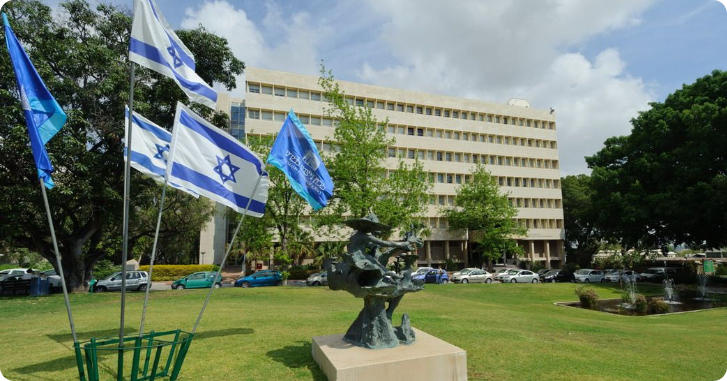


The Israeli Institute for Study of Information Warfare (ISIWIS) has published an article on its website focusing on Israel–U.S.–Azerbaijan relations.
The article highlights the growing importance of strategic cooperation among the three countries in both regional and global contexts.
“Against the backdrop of the current complex regional situation, Israel’s strategic cooperation with Azerbaijan and the United States has been consistently developing. These processes are based not on short-term considerations, but on institutional foundations that create long-term economic and technological resilience,” the report notes.
The article emphasizes that the United States’ interest in the South Caucasus became more evident following Vice President JD Vance’s visit to Baku and the signing of the Charter on Strategic Partnership between the Republic of Azerbaijan and the United States on February 10. The document, signed by President Ilham Aliyev and the U.S. Vice President, envisages expanding cooperation in the fields of economy and trade, energy, connectivity and transit, artificial intelligence and digital development, as well as security and defense.
According to ISIWIS, the Charter provides for the establishment of working groups within three months, the identification of specific projects and roadmaps, and the introduction of regular annual consultation mechanisms. “This indicates that the partnership is not based on episodic agreements, but carries a systematic and institutional character,” the article states.
The publication notes that alongside the strengthening of the U.S.–Azerbaijan partnership, the Israeli vector naturally comes to the fore.
“Infrastructure, transit, and digital technologies are no longer merely instruments of economic development, but also function as mechanisms of influence. In this regard, the U.S.–Azerbaijan–Israel triangle embodies both a stabilizing factor and elements of growing competition.”
The article underlines that this model plays a stabilizing role by creating long-term economic and technological ties that are difficult to disrupt with a single crisis. At the same time, Azerbaijan’s growing status as a transport and technology hub naturally gives rise to the convergence of diverse interests.
Although these processes may cause concern among some actors, Azerbaijan acts primarily on the basis of its national interests. At the center of President Ilham Aliyev’s multi-vector policy lies the country’s development and the well-being of its citizens.
“Large infrastructure and technological projects are always accompanied by criticism and political noise. Yet projects based on practical benefits and mutual interests are successfully implemented. In modern geopolitics, the advantage belongs not to those who protest, but to those who consistently and purposefully build the infrastructure of the future. The cooperation model emerging among the United States, Israel, and Azerbaijan develops precisely on this logic,” the article concludes.